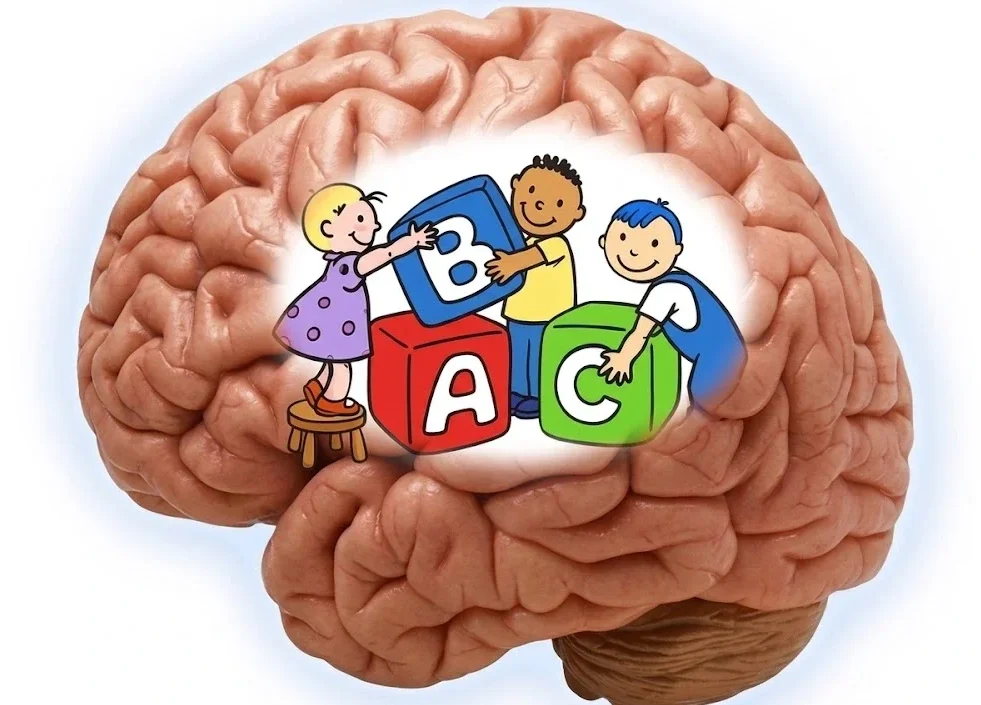
Brain development:
- Brain development starts very early in pregnancy, within the first few weeks.
- Nerve cells (neurons) rapidly grow, connect with each other and form networks.
- After birth, the brain grows very fast, especially in the first 2–3 years.
- Experiences like touch, talking, and bonding help strengthen brain connections.
- Positive interactions (love, play, communication) support healthy brain development.
- Early childhood is a critical period for learning language, emotions, and social skills.
Why Children’s Mental Health Matters?
- Children’s mental health is not a “future issue”, it is happening here and now.
- Mental health is as important as physical health in children.
- It affects how children think, feel, behave, learn, and interact with others.
- Small conversations today can prevent big problems tomorrow.
- Children may not always say “I’m struggling,” but their behavior often speaks for them.
- Strong children are not those without problems, but those who feel supported and understood.
- Around 1 in 5 children may have emotional or behavioral issues at any time.
- By age 16, nearly 4 in 10 children may be diagnosed with a mental health condition.
- Common problems include anxiety, ADHD, behavior issues, and mood disorders.
- The positive side: most of these conditions can be detected early and treated well.
- Early help improves outcomes significantly.
- Parents play a very important role in identifying and supporting their child.
Common Mental Health Conditions in Children:
- Anxiety
- ADHD (Attention-Deficit/Hyperactivity Disorder)
- Autism Spectrum Disorder (ASD)
- Depression
Anxiety
- Anxiety is the most common mental health condition in children, especially in girls.
- While it is normal for children to feel worried sometimes (such as before a test or on the first day of school), an anxiety disorder is different.
- The worry is intense, happens frequently, and affects on everyday life.
Signs to watch for:
- Excessive worry about school, friendships, or family safety
- Avoiding situations like school, social events, or being away from parents
- Frequent stomachaches, headaches, or other physical complaints with no medical cause
- Trouble sleeping due to worry
- Extreme shyness or fear of speaking in front of others
- Irritability or frequent meltdowns triggered by worry
What helps:
- Cognitive Behavioral Therapy (CBT) is a very helpful treatment. It teaches children to understand their anxious thoughts and slowly face their fears in a safe, step-by-step way.
- For moderate to severe anxiety, doctors may suggest medicines (usually a type called SSRI) along with therapy.
- At home, parents can support by:
- Acknowledging the child’s feelings (“I know this feels scary”)
- Encouraging them to be brave
- Gently helping them face their fears instead of avoiding them
ADHD (Attention-Deficit/Hyperactivity Disorder)
- ADHD is a brain-based condition that makes it harder for children to pay attention, control impulses, or sit still.
- It affects about 8% of children in the United States.
- It is more commonly diagnosed in boys, though girls can have it too, their symptoms may look different (more daydreaming, less hyperactivity).
Signs to watch for:
- Difficulty focusing on tasks or following instructions
- Frequently losing things (homework, toys, belongings)
- Trouble sitting still, excessive fidgeting, or running around at inappropriate times
- Acting without thinking (interrupting, blurting out answers)
- Difficulty waiting their turn
- Seeming not to listen when spoken to directly
Autism Spectrum Disorder (ASD)
- Autism is a developmental condition that affects how a child communicates, interacts with others, and experiences the world.
- It is called a “spectrum” because it looks different in every child. Some children need significant daily support, while others may have milder challenges.
- About 1 in 31 children in the U.S. is diagnosed with autism.
Early signs (often noticeable by 12–24 months):
- Not responding to their name by 12 months
- Not pointing to show interest in things by 14 months
- Limited or no eye contact
- Delayed speech or loss of words they previously used
- Repetitive movements (hand flapping, rocking, spinning)
- Strong reactions to sounds, textures, lights, or tastes
- Difficulty with changes in routine
- Limited pretend play
What helps:
- Early support is very important. Starting therapy before age 5 can greatly improve a child’s language, social skills, and daily activities.
- Common therapies include behavioral therapy (like ABA), speech therapy, occupational therapy, and social skills training.
- Children with autism may also have other issues such as anxiety, ADHD, or sleep problems. These should also be recognized and treated.
- Every child with autism is unique and has their own strengths. Support should focus on building these strengths while helping in areas where they need support.
Depression:
- While sadness is a normal emotion, depression in children is persistent and interferes with daily life. It becomes more common in the teenage years, especially in girls.
Signs to watch for:
- Persistent sadness, tearfulness, or irritability lasting more than two weeks
- Loss of interest in activities they used to enjoy
- Changes in appetite or weight
- Sleeping too much or too little
- Low energy or fatigue
- Feelings of worthlessness or excessive guilt
- Difficulty concentrating
- Withdrawal from friends and family
- Talking about death or not wanting to be alive
What helps:
- CBT and other forms of talk therapy are effective treatments.
- For moderate to severe depression, medication (usually an SSRI) may be recommended.
- Physical activity, maintaining social connections, and consistent routines all support recovery.
- If a child talks about wanting to die or hurting themselves, seek help immediately. Call 988 (Suicide Crisis Lifeline) or go to the nearest emergency room
Sleep: The Foundation of Mental Health
- Sleep is essential for a child’s brain development, mood, behavior, learning, and physical health.
- Poor sleep is linked to increased anxiety, depression, attention problems, and behavioral difficulties.
How much sleep do children need?
- Toddlers (1–2 years): 11–14 hours
- Preschoolers (3–5 years): 10–13 hours
- School-age children (6–12 years): 9–12 hours
- Teenagers (13–18 years): 8–10 hours
Tips for healthy sleep (sleep hygiene):
- Keep the same bedtime and wake-up time every day: even on weekends.
- Create a calming bedtime routine: bath, brush teeth, read a book, then lights out (the “4 Bs”: Bathe, Brush, Books, Bed).
- Make the bedroom cool, dark, and quiet.
- Turn off all screens (phones, tablets, TVs) at least 30-60 minutes before bedtime.
- Avoid caffeine, especially in the afternoon and evening.
- Encourage physical activity during the day, but not right before bed.
- Help children learn to fall asleep on their own, in their own bed.
- Get bright light exposure in the morning to support a healthy internal clock.
Screen Time and Mental Health
- Too much screen time can affect a child’s mental health.
- These effects are especially strong in younger children (under age 5).
- It may lead to problems like poor sleep, reduced attention, mood changes, and less time for physical activity and real-life social interaction.
- Children may also become more irritable or anxious, especially with excessive use of social media or fast-paced content.
Practical guidance:
- For children under 18 months: Avoid screen media other than video chatting.
- For children 2–5 years: Limit screen time to 1 hour per day of high-quality content.
- For children 6 and older: Set consistent limits and ensure screen time does not replace sleep, physical activity, or face-to-face interaction.
- Watch and discuss content together when possible.
- Create screen-free zones (bedrooms, mealtimes).
- Model healthy screen habits as a family.
How Social Media Can Affect Teen Mental Health
What Parents Can Do:
- Talk regularly: Ask what your child sees online and how it makes them feel. Teach about ads, privacy, and online safety.
- Set rules together: Create screen rules as a family.
- Protect sleep:
- Keep devices out of the bedroom at night
- Stop screen use at least 1 hour before bedtime
- Use “do not disturb” at night
- Limit screen time: Aim for about 1–2 hours of non-school screen time daily, but focus more on balance than exact numbers.
- Encourage other activities: Promote sports, hobbies, outdoor play, and time with friends.
- Use parental controls wisely: Set limits for content and time, but avoid over-monitoring. Build trust.
- Be a role model: Show healthy screen habits—avoid phone use during meals and family time.
- Be thoughtful about giving a phone: Choose the right time based on your child’s maturity.
When to get alert and alarmed as a parent:
- Speech delay (e.g., few words by 18–24 months)
- Limited eye contact or reduced social interaction
- Frequent temper tantrums beyond expected age
- Difficulty focusing compared to peers
- Excessive screen dependence
- Sleep disturbances (persistent difficulty falling/staying asleep)
- Mild delays in milestones (walking, talking, social play)
- School concerns: declining grades or attention issues
- Social withdrawal or reluctance to engage with others
- Aggression causing harm to others
- Severe anxiety, panic, or phobias interfering with daily life
- Persistent sadness, withdrawal, or signs of depression
Healthy Lifestyle Tips for Children
Balanced Diet
- Include more protein: eggs, milk, chicken, yogurt, beans, nuts
- Give fresh fruits and vegetables daily
- Prefer home-cooked meals over packaged foods
- Limit junk food, sugary drinks, and artificial colors/flavors
- Use healthy snacks: fruit, nuts, boiled corn, sprouts
Hydration (Daily Water Intake)
(1 cup ≈ 200 ml, 1 bottle ≈ 500 ml)
- 1–3 years: 5–6 cups (~2–2.5 bottles)
- 4–8 years: 7–8 cups (~3 bottles)
- 9–13 years:
- Girls: 8–10 cups (~3–4 bottles)
- Boys: 10–12 cups (~4–5 bottles)
- 14–18 years:
- Girls: 11–12 cups (~4–5 bottles)
- Boys: 12–15 cups (~5–6 bottles)
- Give more water in hot weather and during sports
Restful Sleep (Hours per Day)
- 1–2 years: 11–14 hours
- 3–5 years: 10–13 hours
- 6–12 years: 9–12 hours
- 13–18 years: 8–10 hours
- Maintain fixed sleep and wake times
- Avoid screens 1 hour before bedtime
Physical Activity
- At least 60 minutes daily of active play
- Encourage:
- Running, cycling
- Swimming
- Sports (football, soccer)
- Structured activities like karate, Taekwondo, dance, yoga
- Improves focus, mood, and overall health
Consistent Parenting
- Set clear rules and routines
- Be consistent with rewards and consequences
- Use positive reinforcement
- Spend quality time daily
- Encourage open communication
Take Home Points for Parents:
- Knowledge is where every healthy beginning starts
- Get the correct information from the reliable sources (not all the information shared on WhatsApp/Instagram/FB platforms is correct as everybody is playing a doctor there!)
- Early attention is better than late reassurance
- Trust your instincts. If something feels off, it’s worth checking
- Do not fear of ‘what will people say’
- Your child should be your priority
- Seeking help is not a weakness
- Early intervention can significantly improve long-term outcomes
- Awareness and acceptance can overcome stigma and open doors to timely care!
Very informative session.. thanks for sharing 😍🙏
Excellent presentation by Savi, congratulations!
Really great presentation on childhood complex neurological disorders with early detection in management with childhood parental interaction.
It was excellent presentation.